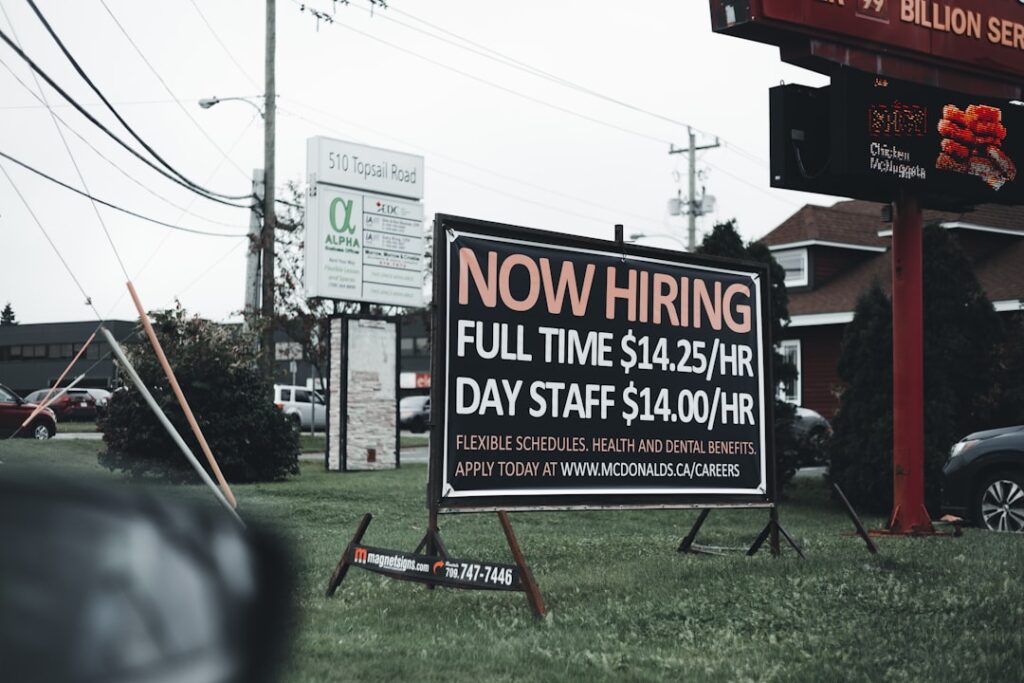

Is AI Replacing Jobs or Creating New Ones? This question sits at the center of today’s workplace anxiety and excitement. From automated customer support to AI generated software code, artificial intelligence is no longer theoretical. It is reshaping industries in real time.
Yet the debate often turns simplistic. Some argue that machines are taking over human roles entirely, while others claim AI will unlock limitless opportunities. The truth in 2026 is more nuanced, and understanding it requires a closer look at how technology historically transforms work.
Is AI Replacing Jobs or Creating New Ones? The Big Picture
Why the Fear That AI Is Replacing Jobs Is So Strong
The fear that AI is replacing jobs is not irrational. Automation has already reduced the need for repetitive and predictable tasks in manufacturing, logistics, and administrative support. Self service kiosks, warehouse robots, and AI powered chatbots are visible reminders that certain roles are shrinking.
Generative AI has intensified these concerns. Tools that write content, analyze legal documents, generate code, or create design mockups can perform in minutes what once took hours. For employees whose daily work is task based and rules driven, this feels like direct competition.
History adds weight to these worries. The Industrial Revolution displaced artisans, and computerization in the 1990s eliminated many clerical positions. Each wave of innovation caused short term disruption before new roles emerged.
However, what makes AI different is its cognitive capability. It can analyze language, images, and patterns at scale. As a result, white collar workers who once felt insulated from automation now question their job security.
Still, job loss is rarely uniform. AI tends to replace tasks rather than entire professions. For example, accountants increasingly rely on AI for data entry and anomaly detection, yet strategic financial planning and advisory services remain human led.
Is AI Replacing Jobs or Creating New Ones in Tech?
The technology sector offers a revealing case study. On the surface, AI coding assistants appear to threaten entry level software developers. If an AI can generate functional code in seconds, why hire junior programmers?
In practice, the opposite trend is unfolding. AI tools accelerate development cycles, enabling companies to build more products faster. This increased output often requires more developers, not fewer, to review AI generated code, manage integrations, and design system architecture.
Moreover, entirely new roles have emerged. Prompt engineers, AI safety specialists, model trainers, and machine learning operations experts were niche titles just a few years ago. In 2026, they are among the fastest growing careers in technology.
Consider cybersecurity. As AI systems grow more powerful, so do AI driven cyber threats. Organizations now hire AI security analysts who specialize in defending against automated attacks. Here, artificial intelligence both creates risk and generates demand for skilled professionals.
This pattern reflects a broader truth. When productivity rises, markets often expand. Lower costs and faster innovation stimulate new products, services, and startups, which in turn create employment opportunities that did not previously exist.
Is AI Replacing Jobs or Creating New Ones Across Industries?
Beyond tech, the impact of AI varies significantly by industry. In healthcare, AI assists with diagnostics, medical imaging, and administrative tasks. Yet rather than eliminating doctors and nurses, it enhances their capacity and improves patient outcomes.
For example, AI powered imaging systems can detect anomalies in scans with high accuracy. Physicians use these insights as decision support tools, not replacements. This allows medical professionals to focus more on patient communication and complex cases.
In finance, algorithmic trading and automated risk assessment have streamlined operations. At the same time, demand for data analysts, compliance specialists, and AI governance experts has increased. Financial institutions require professionals who understand both regulation and machine learning systems.
Retail and e commerce offer another example. AI driven personalization engines recommend products and manage inventory forecasting. While some traditional retail roles have declined, digital marketing strategists, data scientists, and customer experience designers are in higher demand.
Manufacturing illustrates a hybrid model. Robotics and predictive maintenance systems reduce manual labor needs in certain tasks. However, they create demand for robotics technicians, automation engineers, and system integrators who maintain and optimize these systems.
Therefore, when asking, Is AI Replacing Jobs or Creating New Ones, the answer depends heavily on context. Industries that invest in upskilling tend to experience net job transformation rather than pure job loss.
The Skills That Determine Who Wins and Loses
The real dividing line is not between humans and machines. It is between skills that are easily automated and those that complement AI. Routine, rules based tasks are most vulnerable to automation.
In contrast, roles that require creativity, critical thinking, emotional intelligence, and cross functional collaboration are more resilient. AI can generate options, but humans interpret meaning, negotiate tradeoffs, and make ethical decisions.
To stay competitive, professionals should focus on three core skill categories:
- Digital fluency: Understanding how AI tools work and how to integrate them into workflows.
- Analytical thinking: Interpreting AI outputs, identifying biases, and validating results.
- Human centric skills: Communication, leadership, empathy, and strategic judgment.
For example, marketers who learn to use AI for campaign optimization can manage larger portfolios with better performance. Lawyers who leverage AI for document review can dedicate more time to litigation strategy and client counsel.
Upskilling is no longer optional. Online learning platforms, corporate training programs, and micro credentials have expanded rapidly since 2023. Professionals who proactively adapt are more likely to benefit from AI driven transformation.
Employers also carry responsibility. Organizations that invest in reskilling rather than layoffs often preserve institutional knowledge and boost long term productivity. Evidence from early AI adopters shows that augmentation strategies frequently outperform replacement strategies.
Economic Reality: Short Term Disruption, Long Term Transformation
Economically, technological revolutions follow a recognizable pattern. Productivity increases first, disruption follows, and then labor markets gradually rebalance. The transition period can be painful, especially for workers in highly automated roles.
Recent labor data in advanced economies shows mixed outcomes. Certain administrative and support positions have declined, while technology, healthcare, renewable energy, and data related roles have expanded. Overall employment levels remain stable, but job composition is shifting.
Small businesses illustrate another dynamic. AI powered tools reduce barriers to entry by lowering operational costs. Entrepreneurs can launch companies with lean teams, relying on automation for accounting, marketing, and logistics.
This democratization of productivity can stimulate job creation indirectly. As more startups emerge, they generate new services and local employment. However, this benefit depends on access to training and digital infrastructure.
Policy decisions will shape outcomes significantly. Governments that support workforce retraining, update education curricula, and encourage responsible AI innovation are more likely to see net positive employment effects.
Therefore, when evaluating whether AI is replacing jobs or creating new ones, it is essential to consider time horizon. In the short term, displacement is real for some workers. In the long term, history suggests that economies adapt and new categories of work emerge.
Conclusion
So, is AI Replacing Jobs or Creating New Ones? The evidence in 2026 suggests it is doing both, but not evenly. AI replaces specific tasks and roles that are repetitive and predictable, while simultaneously creating demand for new skills, new professions, and entirely new industries.
The critical factor is adaptation. Individuals, companies, and governments that invest in learning and responsible innovation are more likely to thrive. Instead of asking whether AI will take jobs, the better question is how you can evolve with it. Start building AI complementary skills – learn how to master it or even train your own AI model and position yourself for the opportunities ahead.