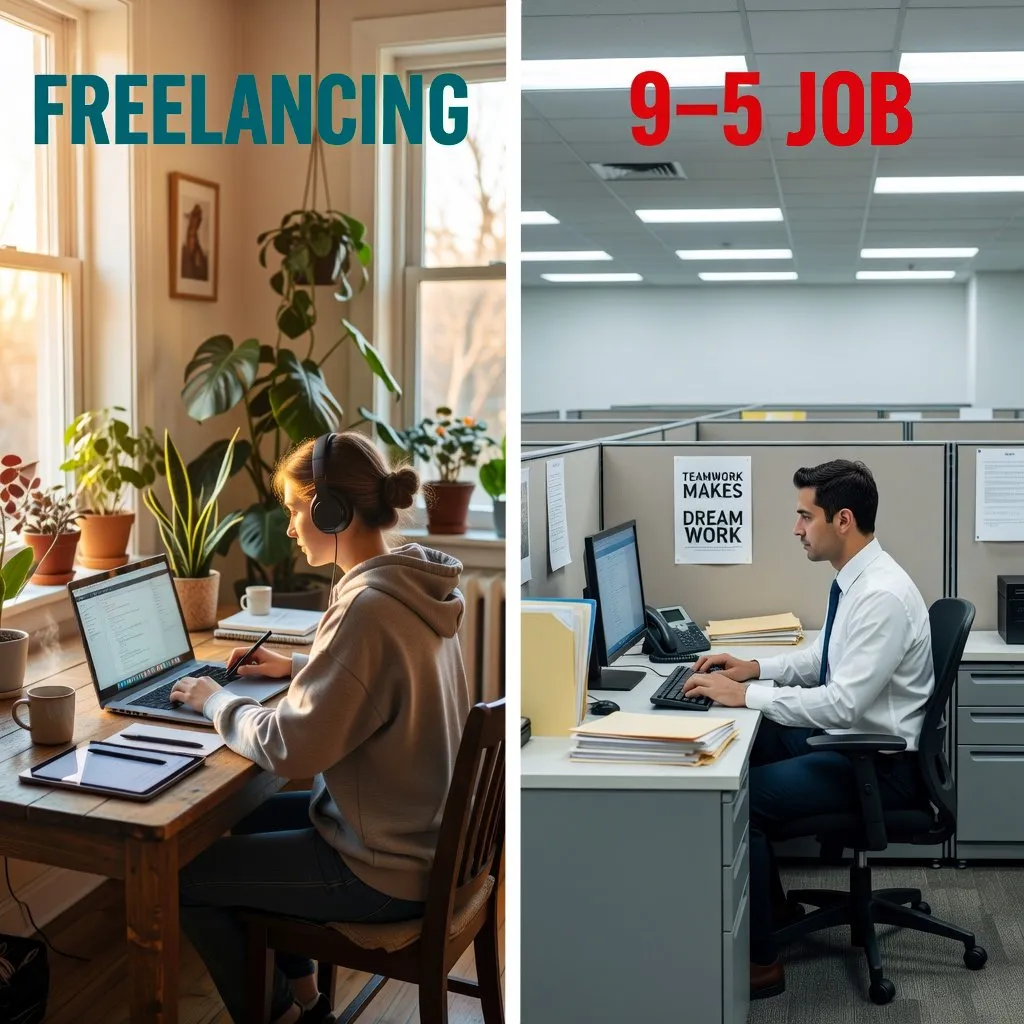

Choosing between freelancing vs 9–5 job is one of the biggest career decisions professionals face today. With remote work expanding and digital opportunities growing in 2026, both paths offer unique advantages and tradeoffs.
Some people crave stability and structured growth, while others value flexibility and independence. In this detailed comparison of freelancing vs 9–5 job, you will discover the real pros and cons of each option so you can make a confident, informed decision.
Freelancing vs 9–5 Job: Pros and Cons You Must Consider
Income Potential and Financial Stability in Freelancing vs 9–5 Job
Income is often the first factor people evaluate when comparing freelancing vs 9–5 job. A traditional job typically offers a fixed salary, predictable paydays, and structured raises. This consistency makes budgeting, saving, and planning long term goals much easier.
In contrast, freelancing income can fluctuate from month to month. One month may bring multiple high paying clients, while another may feel slow. Although this variability can feel risky, it also creates opportunities for higher earnings.
Freelancers are not limited to a salary cap set by an employer. If you build strong skills and a reliable client base, you can scale your income significantly. Many experienced freelancers in fields like software development, marketing, and consulting earn more than full time employees in similar roles.
However, higher earning potential comes with responsibility. Freelancers must handle invoicing, tax payments, retirement savings, and health insurance independently. In a 9–5 job, employers often cover part of these costs through benefits packages.
Another important consideration is job security. A salaried employee may receive severance pay or unemployment benefits if laid off. A freelancer, on the other hand, can lose a major client overnight without any safety net.
To reduce financial risk, freelancers should maintain an emergency fund covering at least three to six months of expenses. Diversifying clients instead of relying on one major source of income also increases stability. When analyzing freelancing vs 9–5 job from a financial perspective, risk tolerance plays a key role.
Ultimately, if you prefer predictable income and lower financial uncertainty, a 9–5 job may feel safer. If you are comfortable managing irregular cash flow in exchange for higher earning potential, freelancing could be more rewarding.
Work Life Balance and Flexibility in Freelancing vs 9–5 Job
Flexibility is one of the most discussed aspects of freelancing vs 9–5 job. Traditional employment usually follows a set schedule, often forty hours per week. While some companies now offer hybrid or remote models, core working hours are still common.
Freelancers generally control when and where they work. You can schedule projects around your peak productivity hours or personal commitments. This freedom is especially appealing for parents, digital nomads, or individuals pursuing passion projects.
However, flexibility does not automatically mean fewer hours. Many freelancers work longer days, especially when managing multiple clients or tight deadlines. Without clear boundaries, work can easily spill into evenings and weekends.
In a 9–5 job, once you log off, your responsibilities often pause until the next workday. This separation can protect personal time and reduce decision fatigue. On the other hand, commuting and fixed schedules may limit time for family, fitness, or hobbies.
Freelancers also have the ability to take time off without requesting approval. Yet unpaid time off directly affects income. Employees typically receive paid vacation days and sick leave, which provide peace of mind.
To create healthy balance as a freelancer, setting clear working hours and client expectations is essential. Using project management tools and scheduling software can help maintain structure. Meanwhile, employees can negotiate flexible arrangements or remote options to improve balance within a 9–5 role.
When weighing freelancing vs 9–5 job in terms of lifestyle, consider your personality and priorities. Do you value autonomy above all else, or do you prefer structured routines that clearly separate work and personal life?
Career Growth, Skill Development, and Networking
Career progression looks very different in freelancing vs 9–5 job environments. In a corporate setting, there is often a clear path from entry level roles to management positions. Promotions, performance reviews, and structured training programs guide advancement.
Companies frequently invest in employee development through workshops, certifications, and mentorship. Working alongside experienced colleagues also accelerates learning. This structured growth can be particularly valuable early in your career.
Freelancers, by contrast, design their own career paths. You choose which projects to accept, which skills to develop, and which industries to explore. This autonomy allows rapid specialization in high demand niches such as artificial intelligence consulting, content strategy, or cybersecurity.
However, growth requires self discipline. Without a manager setting goals, freelancers must actively seek learning opportunities. Online courses, professional communities, and industry conferences become essential tools for staying competitive.
Networking also differs significantly. In a 9–5 job, your network often expands through colleagues, clients, and internal events. Freelancers build networks by engaging on professional platforms, attending virtual events, and delivering excellent client experiences that lead to referrals.
One advantage freelancers have is exposure to diverse industries. Working with multiple clients broadens experience quickly. Employees may gain deeper expertise within one company but might have limited cross industry exposure.
In 2026, adaptability is a critical career skill. Freelancers frequently sharpen this ability because they must respond to changing market demands. Employees can also cultivate adaptability by taking on cross functional projects and continuous learning initiatives.
When comparing freelancing vs 9–5 job for long term growth, ask yourself how much structure you need. If you thrive with guidance and defined promotion tracks, employment may suit you. If you prefer designing your own professional journey, freelancing offers unmatched freedom.
Job Security, Benefits, and Long Term Planning in Freelancing vs 9–5 Job
Job security remains a central concern in the debate around freelancing vs 9–5 job. Traditional employment often includes contracts, labor protections, and employee benefits. These factors contribute to a sense of stability.
Benefits commonly include health insurance, retirement contributions, paid leave, and sometimes bonuses. These perks add significant value beyond the base salary. Over time, employer matched retirement plans can substantially grow personal wealth.
Freelancers must independently manage all these elements. You are responsible for securing health coverage, setting up retirement accounts, and planning for taxes. While this autonomy allows customization, it also demands financial literacy and proactive planning.
Economic downturns affect both paths differently. Companies may lay off employees during recessions. At the same time, freelancers might experience reduced client budgets or delayed payments.
Interestingly, diversification can sometimes make freelancing more resilient. If you work with multiple clients across industries, the loss of one contract may not be devastating. In contrast, employees rely heavily on a single employer for income.
Long term planning also includes considerations such as buying a home or supporting a family. Lenders may prefer stable employment history when approving loans. Freelancers often need to provide additional documentation to demonstrate consistent income.
To strengthen security as a freelancer, consider forming a legal business entity and maintaining clear financial records. Working with an accountant can simplify tax planning and improve credibility with financial institutions. Employees should review benefit packages carefully and negotiate where possible.
When analyzing freelancing vs 9–5 job for long term stability, there is no universal winner. Security depends on your financial habits, market demand for your skills, and ability to adapt.
Personality Fit and Lifestyle Preferences
Beyond money and security, personal temperament heavily influences the freelancing vs 9–5 job decision. Some individuals thrive in structured environments with defined roles and clear expectations. Others feel constrained by hierarchy and prefer independence.
Freelancing requires self motivation and resilience. You must find clients, negotiate contracts, and manage deadlines without external supervision. If you struggle with procrastination or uncertainty, this path may feel overwhelming.
On the other hand, freelancers enjoy creative control and direct impact on their business outcomes. You can select projects aligned with your interests and values. This alignment often leads to higher job satisfaction.
Employees benefit from collaboration and team support. Daily interaction with colleagues can foster camaraderie and shared purpose. For many people, this social environment enhances engagement and mental well being.
Freelancers may experience isolation, especially when working remotely. Building a community through coworking spaces or online groups can counteract this challenge. Meanwhile, employees may feel limited by office politics or organizational constraints.
Lifestyle goals also matter. If you aim to travel frequently or relocate internationally, freelancing can provide location independence. A 9–5 job may offer relocation opportunities, but usually with less flexibility.
Consider conducting a personal audit before choosing. Evaluate your tolerance for risk, desire for autonomy, need for structure, and long term ambitions. Honest self assessment often reveals which side of freelancing vs 9–5 job aligns with your strengths.
It is also important to recognize that careers are not permanent decisions. Many professionals transition between freelancing and traditional employment at different life stages. Your choice today does not lock you into one path forever.
Conclusion
The debate around freelancing vs 9–5 job ultimately comes down to priorities, personality, and risk tolerance. Freelancing offers flexibility, independence, and high earning potential, while a 9–5 job provides stability, structured growth, and valuable benefits.
Carefully assess your financial situation, lifestyle goals, and long term career vision before deciding. Whether you choose freelancing, traditional employment, or a hybrid of both, take action today to build a career path that supports the life you truly want.